A housing market usually tells you what kind of jobs sit behind it. Sterling Heights Michigan has a rare mix for metro Detroit: factory payroll, defense work, family neighborhoods, and prices that still feel reachable compared with many U.S. suburbs. For buyers, renters, and small investors, the core question is simple: does the city have enough economic weight to keep local housing values steady when mortgage rates, layoffs, or wider market fear hit? The answer is not hype. It comes from the city’s manufacturing base, its place in Macomb County, and the daily demand from workers who want a practical commute, decent schools, and a house that does not ask them to overreach. For readers tracking regional property insight, Sterling Heights is worth watching because it does not depend on one flashy trend. It runs on wages, location, and habit. That is boring in the best way. Current market pages show mid-$300,000 pricing, fast sales activity, and steady one-year value gains, which points to demand that has cooled from pandemic peaks but has not gone soft.
Why Factory Payroll Still Shapes Detroit Suburb Housing
Factory towns are often judged by old memories. People picture layoffs, empty plants, and neighborhoods waiting for the next bad headline. That view misses what is happening in stronger inner-ring and middle-ring suburbs around Detroit. Sterling Heights is not a museum of old industry. It is a working city where production, engineering, skilled trades, and defense contractors still send paychecks into nearby neighborhoods.
The city’s own industry materials list major automotive and advanced manufacturing assets, including assembly, stamping, transmission, and axle operations, while also pointing to a large regional pool of automotive, engineering, design, technician, and skilled trades workers. That matters for Detroit suburb housing because stable wages do more than help one buyer qualify for a loan. They create repeat demand from renters, move-up buyers, downsizers, and households that want to stay near family and work.
Manufacturing Jobs Create Buyers Who Think in Commute Time
The most reliable housing demand is not always the highest-income demand. Sometimes it is the household that can name the exact freeway ramp, shift time, and snow route before touring a house. That buyer is not chasing a lifestyle brand. They are trying to make Tuesday morning work.
Manufacturing jobs create that kind of buyer. A technician working near Van Dyke, a plant supervisor heading toward Mound Road, or a defense contractor splitting time between Sterling Heights and Warren may look at housing through a narrow lens: distance, monthly payment, garage space, school fit, and road access. Those needs can keep demand grounded even when the broader housing market feels moody.
There is a non-obvious point here. Factory-based demand can be less dramatic than tech-driven demand, but it can also be stickier. A remote worker can leave a metro area after one company policy change. A skilled trades worker tied to a plant, supplier, or defense corridor often has a reason to stay close. That does not make the market risk-free. It does make it less dependent on passing fashion.
A Working Suburb Can Outperform a Trendy One
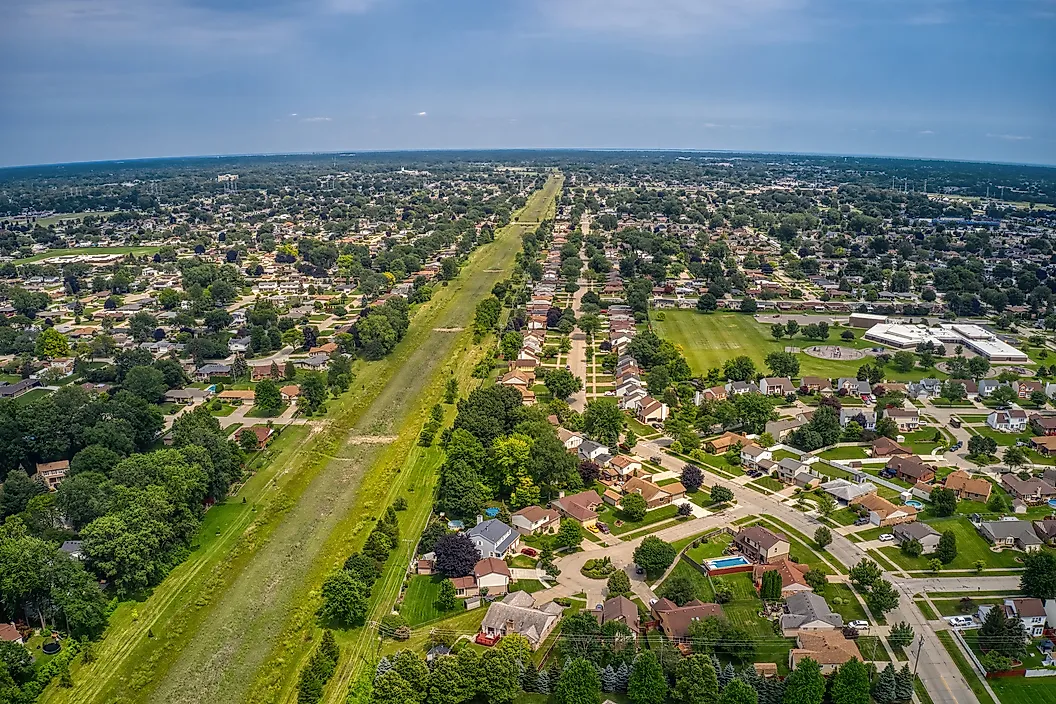
Some suburbs rise because people discover them. Others hold value because people need them. Sterling Heights fits the second group. It has retail corridors, established subdivisions, industrial districts, and enough density to support daily services without feeling like a high-rise city.
For a buyer, that can be more useful than charm. A brick ranch near schools, a three-bedroom colonial with a basement, or a condo close to major roads may not win design awards. Yet these homes often match how local households actually live. The value is not in the story a listing tells. It is in the routines the house can handle.
That is why first-time buyer neighborhood checklist research should look past surface appeal. Ask whether the area has a wide base of people who can afford to live there, work nearby, and stay through a full market cycle. In Sterling Heights, that base is tied closely to manufacturing jobs, defense work, health care access, and the larger Detroit employment web.
How Sterling Heights Michigan Turns Industry Into Housing Support
The city’s housing strength is not only about factories. It is about the chain reaction factories create. Payroll supports restaurants. Suppliers need warehouse space. Engineers want short commutes. Families need schools, parks, and local stores. Retirees stay because their social life, doctors, and children are nearby. Housing gains support from all of that at once.
The U.S. Census Bureau lists Sterling Heights with a 2020 population above 134,000, while Census QuickFacts reports 2020–2024 median household income near $79,900. Those numbers do not prove every block is strong. They do show scale. A suburb with that many households can absorb normal turnover better than a smaller bedroom community tied to one subdivision or one employer.
The City Has More Than One Economic Engine
Sterling Heights benefits from automotive history, but it is not limited to one lane. Defense work adds another layer. The city’s official defense materials name major area employers and point to proximity to military-related assets in the region. That mix matters because defense and automotive cycles do not always move together.
A local housing market feels safer when demand comes from several pay sources. One household may depend on a vehicle plant. Another may work for a contractor. Another may commute into Troy, Warren, Detroit, or the broader Macomb-Oakland job belt. This is not glamorous. It is practical. Practical demand pays mortgages.
Here is the twist: a city can be less fragile when it lacks one single identity. A suburb marketed only as luxury has to keep proving it is special. A suburb built around work, schools, shopping, roads, and family networks has many smaller reasons to hold interest. That is why local housing values can stay supported even when the national mood turns cautious.
Property Values Follow Confidence, Not Headlines
Many buyers ask whether a manufacturing suburb is safe for long-term housing value. The better question is whether local households still trust the place enough to buy, rent, improve, and stay. Confidence shows up in small choices. A family replaces a roof instead of moving away. A landlord renews a lease. A buyer offers fast because the house fits their commute.
Recent housing data points to that kind of confidence. Zillow reported a typical home value a little above $313,000 with a positive one-year change through May 2026, while Redfin showed a median sale price near $320,000 and homes selling quickly over the three months ending May 2026. The numbers are not wild. That is the point. A calmer gain can be healthier than a price spike that burns out buyers.
Sterling Heights also has a strong assessed-value profile within Michigan. City reporting from 2024 placed its industrial property value high among top state communities and residential property value near $6 billion. That is not a promise of future gains. It does show that the tax base is not thin.
Where Buyers and Renters Feel the Stabilizing Effect
Housing values do not stabilize on a spreadsheet. They stabilize when people still show up for real homes at real prices. In Sterling Heights, the demand story is easier to see at the household level. A renter may want a safe drive to work. A young family may want a yard. A retiree may want to stay near children in Macomb County. An investor may want a house that rents to someone with a steady job.
That mix gives the city a wider buyer pool than many people expect. Realtor.com’s local market snapshot describes the city as balanced, with a median listing price around $329,900 and a median rent around $2,000 per month. A balanced market can frustrate bargain hunters because prices may not fall much. It can also protect owners from the sharp swings seen in places where demand depends on speculation.
Affordability Still Has a Ceiling
Sterling Heights is not cheap in the way it was a decade ago. A buyer earning a solid wage may still feel squeezed by mortgage rates, insurance, taxes, and repair costs. A $300,000-plus home can stretch a household that also has car payments, childcare, or student debt.
That pressure matters. It keeps the market honest. When a suburb gets too expensive for the workers who support it, demand becomes thinner. Sterling Heights has to maintain that middle ground: priced high enough to reward owners, but not so high that nurses, technicians, line workers, mechanics, and young families are pushed out.
This is where Detroit suburb housing differs from high-cost coastal markets. The value pitch is not that every home is a steal. It is that many homes still connect to real local wages. For an owner, that means the next buyer is easier to imagine. For a renter, it means the city may offer a path from lease to ownership if income and savings line up.
Rental Demand Comes From Real Life, Not Speculation
A healthy rental market does not need drama. It needs people with reasons to stay. Sterling Heights has those reasons: jobs, schools, retail, freeway access, and family ties across Macomb County. A renter may choose the city because it sits close enough to Detroit employment but feels more suburban day to day.
For small landlords, that is useful. A three-bedroom home with parking and laundry can serve families, workers relocating to the area, or households waiting to buy. The rent is supported by need, not by a short-term trend. That does not mean any property works. Condition, school boundary, street feel, and commute routes still decide the outcome.
Investors using a rental property due diligence guide should be careful with older houses. A lower purchase price can hide furnace age, sewer line issues, foundation repair, or dated electrical panels. The best rental math in Sterling Heights often comes from boring properties kept in solid shape. Boring collects rent.
What Could Threaten Stability in a Manufacturing Suburb
A strong base does not remove risk. It changes the type of risk. In Sterling Heights, the concerns are not hard to name: auto industry shifts, plant investment cycles, interest rates, tax burden, aging housing stock, and buyer fatigue. A city tied to production has to keep adapting as vehicles, defense needs, and labor skills change.
Still, risk should be measured, not feared. The question is whether the city has enough depth to handle pressure. Sterling Heights has scale, established neighborhoods, and multiple employment links. That gives it room to bend. It does not make it immune.
Auto Cycles Can Hit Sentiment Before They Hit Prices
Manufacturing news affects local psychology fast. A plant rumor can make buyers pause before the first layoff happens. A new investment announcement can make sellers more confident before wages rise. Housing reacts to belief because buyers are making long-term decisions with incomplete information.
That is why local housing values may move slower than headlines. A bad auto news cycle can soften demand for a season, but most owners do not sell overnight. Families still need housing. Workers still commute. Landlords still renew leases. The market may lose heat before it loses structure.
The counterintuitive part is that some uncertainty can keep prices from overheating. When buyers remain cautious, bidding wars stay limited. That can protect long-term stability because prices do not race far beyond local incomes. A market that never gets too inflated has less to correct later.
Older Housing Stock Rewards Careful Owners
Many homes in the city were built for normal middle-class life: attached garages, basements, practical lots, and enough room for families. Those features age well. Roofs, plumbing, windows, concrete, and mechanical systems do not.
This is where owner behavior matters. A neighborhood with steady employment often sees steady repair spending. People replace driveways. They finish basements. They keep up yards. Those small investments support nearby values because buyers can feel when a block has not been neglected.
For buyers, the smartest move is to price repairs before falling in love with a floor plan. For owners, maintenance is not cosmetic. In a working suburb, a clean inspection can be a selling advantage because many buyers are already stretched by monthly payment. A house that needs fewer surprises will often beat a prettier one with hidden costs.
Conclusion
Sterling Heights is not a suburb built on wishful thinking. Its housing market rests on work, access, household scale, and a manufacturing base that still shapes daily life across Macomb County. That does not mean every buyer should rush in or every investor will find easy returns. Prices already reflect demand, and older homes need sober inspection. Still, Sterling Heights Michigan has one trait many markets lack: a clear reason for people to keep living there. The best housing markets are not always the loudest ones. They are the places where paychecks, commutes, schools, and family routines keep pulling people back. If you are buying, renting, or studying local housing values, treat this city as a practical market with real support underneath it. Watch the jobs, watch the condition of the housing stock, and watch whether local wages can still meet monthly payments. That is where the truth lives. Make your next move with numbers, not noise.
Frequently Asked Questions
Is Sterling Heights a good place to buy a home near Detroit?
Yes, it can be a strong fit for buyers who want suburban housing, access to jobs, and a practical commute across Macomb County. The best value often comes from homes with solid maintenance records, not the flashiest updates.
Why does manufacturing matter for home values in Sterling Heights?
Manufacturing supports steady local demand because workers often want to live near plants, suppliers, and related employers. That demand can help homes hold value, especially when buyers are choosing based on commute, payment, and long-term household needs.
Are homes in Sterling Heights still affordable for first-time buyers?
Some homes remain reachable compared with higher-cost U.S. suburbs, but affordability is tighter than it used to be. Mortgage rates, taxes, repairs, and insurance can raise the monthly cost beyond the listing price.
Is Sterling Heights better for renters or buyers?
It depends on timing and budget. Renters may like the city for job access and stability, while buyers may gain from long-term ownership if they choose a well-kept property and plan to stay several years.
What neighborhoods should buyers look at in Sterling Heights?
Start with commute routes, school preferences, home condition, and nearby services rather than chasing one “best” area. A good block with cared-for homes can matter more than a slightly better address with repair issues.
Can investors make money with rental homes in Sterling Heights?
Yes, but the margin depends on purchase price, repairs, taxes, and rent quality. Older homes can work well when maintenance is under control. A cheap property with major deferred repairs can erase profit fast.
What risks should buyers watch in a manufacturing suburb?
Buyers should watch employer news, interest rates, property taxes, and the cost of updating older homes. Local job shifts can affect buyer confidence before they show up in sale prices.
Does Sterling Heights depend too much on the auto industry?
The auto sector is a major influence, but the city also benefits from defense activity, regional commuting, retail services, and established residential demand. That wider base helps reduce reliance on one single source of housing demand.